From 3 to 6 Bedrooms: Unlocking HMO Investment Potential in Reading
The Art of Seeing Value Before It’s Visible | Part 1
How a traditional Victorian terrace on Catherine Street was repositioned into a six-bedroom HMO investment property — with potential for further development.
Seeing the Opportunity Beyond the Property
In property investment, value isn’t always obvious from the initial viewing.
Sometimes, the opportunity lies in recognising how an existing property could be repositioned to better serve the local rental market.
At Catherine Street in Reading, we identified the potential to transform a traditional three-bedroom Victorian terrace into a professional House in Multiple Occupation (HMO).
The property had a conventional two-storey layout, dated interiors and underused space. While suitable as a family home, its configuration presented an opportunity to explore a different rental strategy.
The investment question was simple: Could we create a more productive rental asset from the same property?
The Strategy: From Family Home to Professional HMO
Rather than relying solely on future property price growth, our approach focused on creating value through refurbishment and improved use of space.
The strategy centred on converting the existing three-bedroom property into a six-bedroom HMO, designed for professional tenants.
Working alongside Reading Design Studio and our refurbishment team, we coordinated a transformation involving:
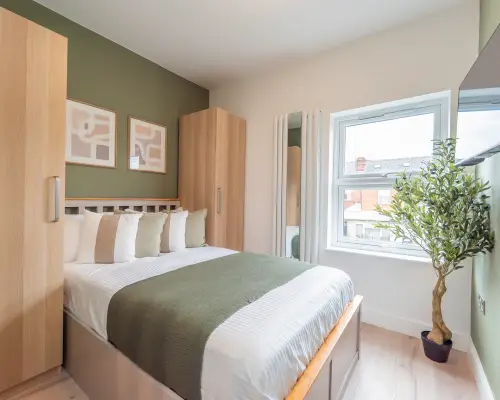
- 3 to 6 Bedrooms: Reconfiguring the property to accommodate six en-suite bedrooms.
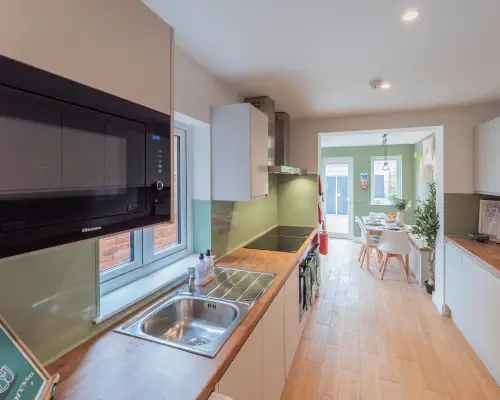
- Improved Rental Accommodation: Creating private facilities alongside a practical shared kitchen and dining area.
- Property Upgrades: Improving building services, internal finishes and overall functionality.
- Long-Term Appeal: Introducing cohesive interiors and a low-maintenance garden suited to professional shared living.
The completed property now comprises six bedrooms and six en-suite bathrooms, providing a different rental proposition from its original three-bedroom configuration.
Exploring Further Value: The Seven-Bedroom Proposal
Our assessment didn’t end with the completed six-bedroom conversion.
We also explored whether the property could accommodate an additional en-suite bedroom.
A seven-bedroom, seven-en-suite scheme has been developed, subject to planning approval and other applicable requirements.
This potential next stage illustrates an important principle of value-add property investment: identifying opportunities for further improvement while evaluating whether the additional costs, permissions and potential rental income support the investment case.
The proposed seventh bedroom is not part of the completed development, and its feasibility and commercial outcome remain subject to further assessment.
What This Project Demonstrates for Investors
The Catherine Street transformation reflects an approach to HMO property investment in Reading built around three considerations:
Identify the Potential
Look beyond the existing layout to assess whether a property could support an alternative rental strategy.
Create Value Through Development
Consider how refurbishment, improved accommodation and efficient use of space could strengthen the property’s rental proposition.
Assess the Longer-Term Strategy
Evaluate rental demand, operating costs, financing, compliance and potential future improvements before making investment decisions.
Increasing bedroom numbers may improve a property’s income potential, but it does not automatically guarantee higher profits, valuations or investment returns.
The Bigger Picture
Catherine Street began as a traditional three-bedroom house.
Today, it is a completed six-bedroom, six-en-suite HMO, with a further seven-bedroom proposal under consideration.
For us, the project represents an important aspect of property investment: recognising opportunities to improve an existing asset, then assessing how to turn that potential into a practical development strategy.
We don’t simply look at what a property is. We assess what it could become — and whether the numbers support the opportunity.
Explore HMO Investment Opportunities in Reading
At Reading Properties Group, we help investors identify, assess and develop property opportunities in Reading, specialising in HMO sourcing, property refurbishment and value-add development.
Our approach brings together local market knowledge, investment analysis and coordinated project delivery.
Important Information
This case study relates to a specific property project. The completed development comprises six bedrooms and six en-suite bathrooms. The proposed seventh bedroom remains subject to planning approval and other applicable requirements.
Property investment involves risk. Rental income, property values, development costs and financing conditions can affect investment outcomes. This article is for general information only and does not constitute financial, mortgage, legal, tax or investment advice. Independent professional advice and appropriate due diligence are recommended.